
The best way to learn Western astrology is to follow a structured sequence and practise on a birth chart. Start with planets, zodiac signs, houses, and aspects, then combine them into a reading. A beginner book, a guided app, or a course can provide that sequence.
Start with a small vocabulary, a reliable chart, and a habit of checking how an interpretation was reached.
What should you learn first in Western astrology?
Begin with natal astrology: the study of a birth chart. Most modern Western beginner resources use the tropical zodiac. Check which tradition your resource teaches before combining it with another.
Learn these five building blocks in order:
- Chart orientation and symbols. Find the Ascendant, the zodiac ring, house numbers, and planetary glyphs. Learn to distinguish a planet's sign from its house.
- Planets. Learn the themes associated with the Sun, Moon, Mercury, Venus, Mars, Jupiter, and Saturn. Add Uranus, Neptune, and Pluto if you are following a modern curriculum.
- Signs. Study the twelve signs through their elements and modalities. Move beyond lists of personality traits.
- Houses. Learn which areas of life each house represents and how your chosen house system divides the chart.
- Aspects. Recognise conjunctions, oppositions, squares, trines, and sextiles. Learn what an orb means before treating every line on a chart as equally significant.
A useful first exercise is to explain one placement: what does the planet symbolise, how does the sign modify it, and which area of life does the house represent? The rest of the chart adds context.
Keep the same zodiac and house system for your first exercises. If charts show different placements, check their settings. Our guide to tropical and sidereal astrology explains one source of these differences.
Which way of learning astrology suits you?
Each method has a different role. Choose one as your main learning path, then add another when it solves a specific problem.
- Books: useful for a coherent explanation and a reference you can return to. You must supply your own exercises and study routine.
- Structured training: useful for feedback, discussion, and supervised chart practice. The syllabus and quality of teaching matter more than the certificate's name.
- AstroLingo: useful for guided lessons and interactive practice with a birth chart, especially if you prefer studying in short sessions.
- Social media: the weakest choice as a primary method. Short posts can introduce a topic, but a feed rarely teaches prerequisites or checks what you have understood.
For independent study, a practical combination is one beginner book alongside AstroLingo's guided astrology lessons. When you can explain the basics but struggle to combine them, teacher feedback becomes particularly useful.
Learn Western astrology with books
A book gives you a stable sequence and a reference to revisit. Pair reading with chart exercises to check that you can apply each concept.
Start with an accessible introduction
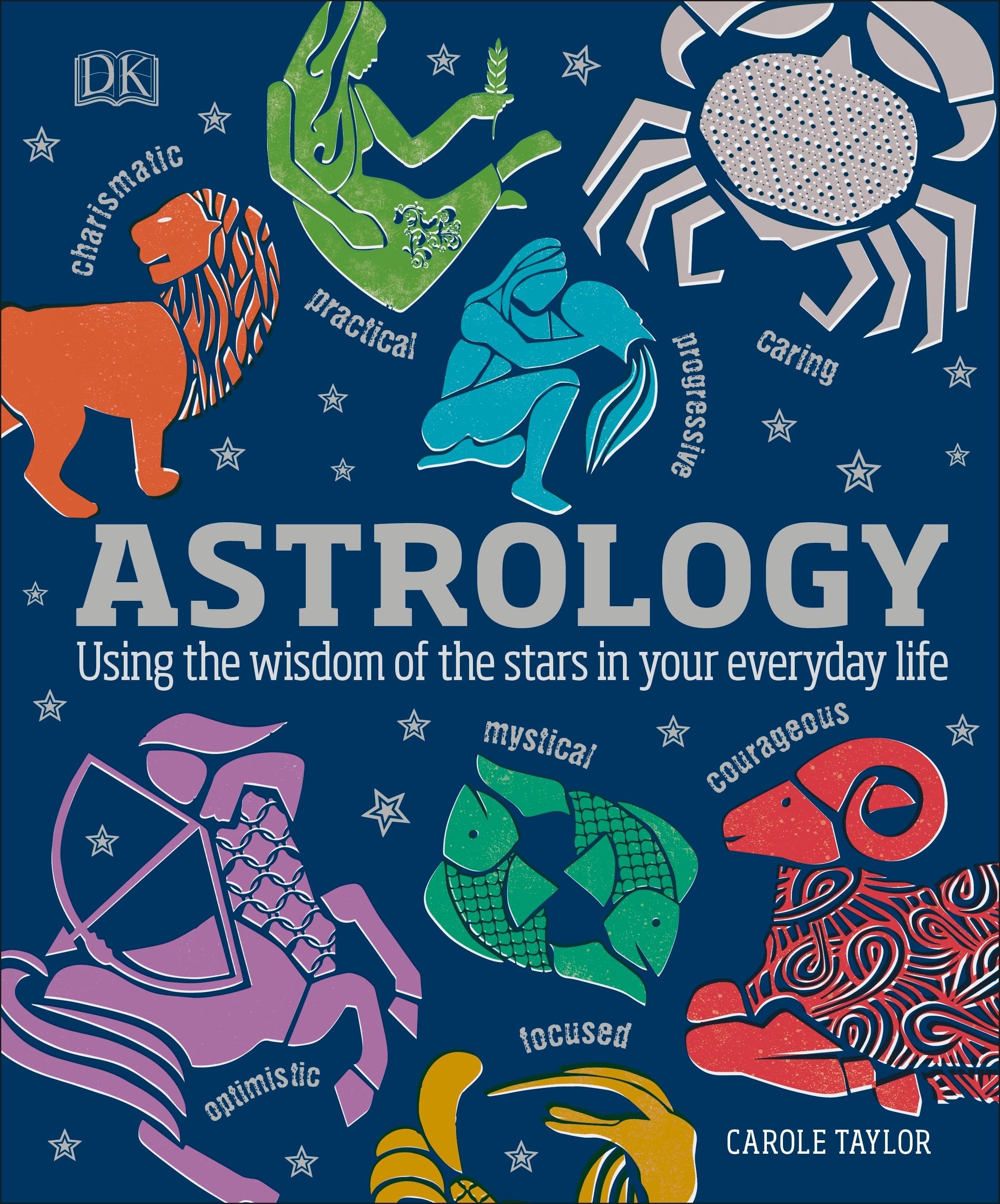
Carole Taylor's Astrology, published by DK, is an illustrated introduction to signs, planets, houses, and the birth chart, suitable for beginners studying modern Western astrology.
Work through one topic at a time. Close the book, find examples on a chart, and explain them in your own words.
Add a more specialised book later
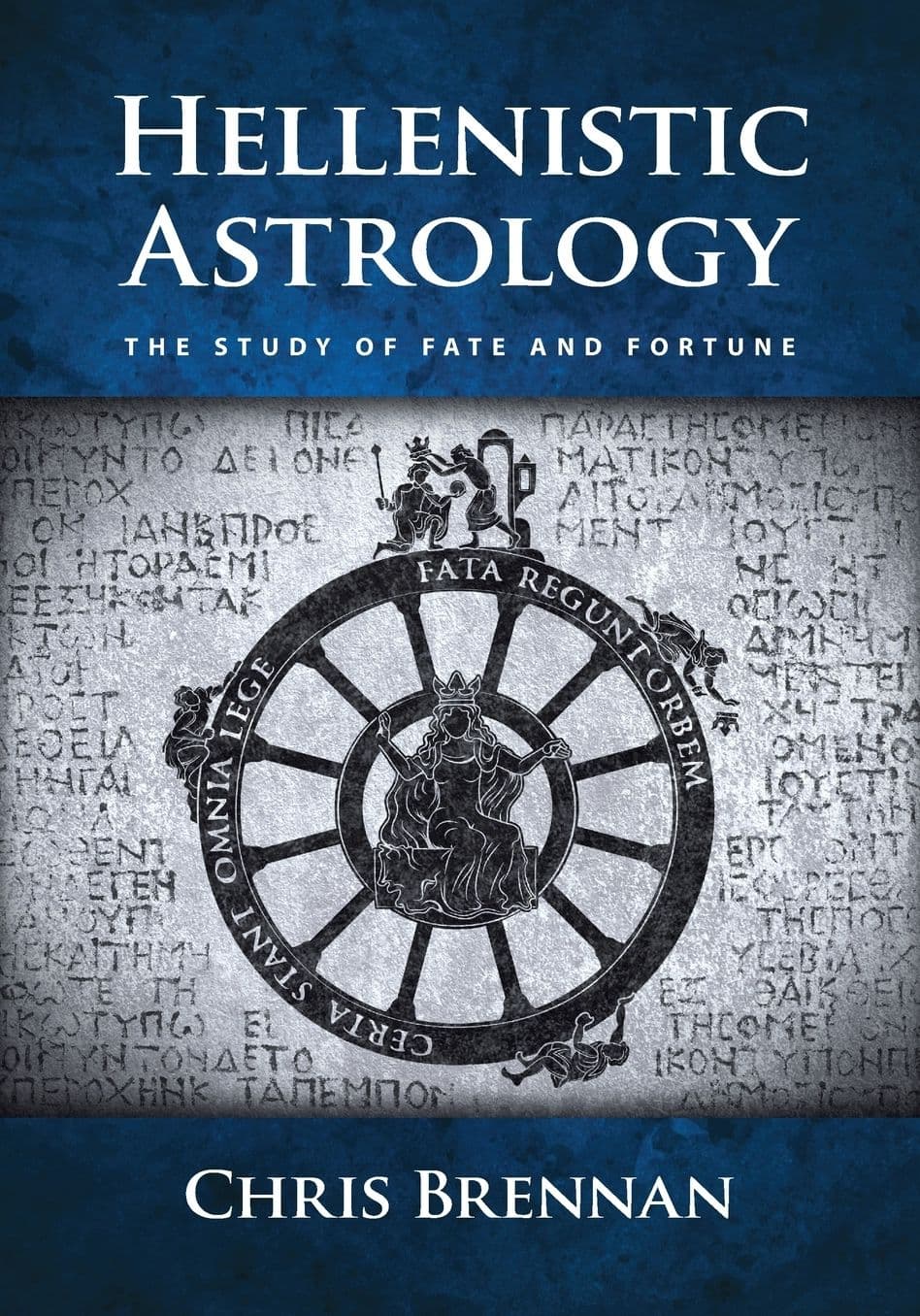
Chris Brennan's Hellenistic Astrology: The Study of Fate and Fortune explores the history and techniques of an ancient Western tradition. Consider it when you want to study that tradition in depth.
Start with one introduction and finish its basic exercises before expanding your reading.
Learn through structured astrology training
A taught course helps you spot mistakes through feedback. A teacher can question your reasoning and show what you overlooked in a chart.
Before enrolling, read the syllabus and look for:
- A clear progression from chart basics to interpretation.
- A stated tradition, zodiac, and house system.
- Worked examples, exercises, and feedback on your reasoning.
- Time for questions and discussion.
- Clear costs, access terms, and realistic claims about what you will learn.
For recorded courses, check whether assignments or teacher access are included. If you hope to practise professionally, look for supervised readings, ethics, and client communication training.
Learn with AstroLingo and your birth chart
AstroLingo combines a guided learning path with interactive birth-chart exercises. Its official site describes lessons on chart orientation, signs, planets, houses, aspects, and chart patterns. Exercises include recognising glyphs and identifying features directly on a chart.
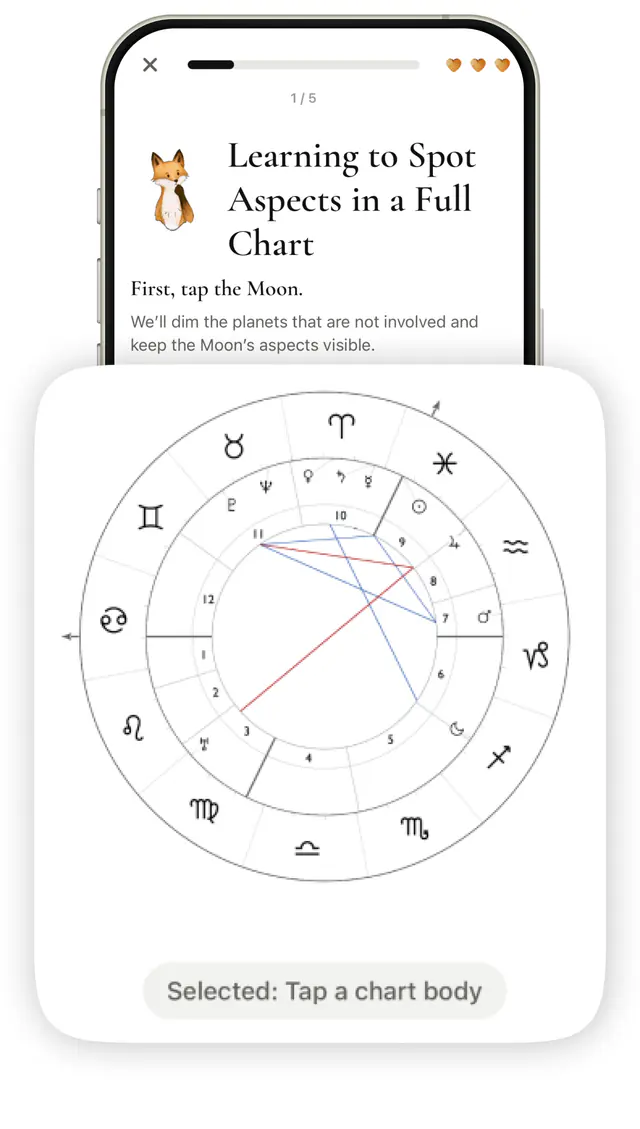
That format suits beginners who want to do something with each new concept immediately. Use it as a regular practice session: complete a lesson, explain the idea without looking, then locate an example on your chart. If an answer surprises you, write down the underlying rule instead of only repeating the exercise.
The site describes free introductory lessons on iPhone and optional Plus courses. Check the site and app store for current availability and terms.
Publisher note: AstroLingo and FreeAstroAPI are published by the same team.
Why social media is the worst primary learning method
We rank an unstructured social feed last for beginners because it rarely provides a learning sequence.
A short video might explain a Venus placement today and a complex transit tomorrow without teaching the concepts connecting them. Posts about single placements also tend to omit chart context.
Use social media to discover authors or teachers, then seek a complete explanation and test your understanding through an exercise.
A full lecture or organised course on a social platform can still be useful. Judge its structure, examples, and practice opportunities.
A four-week beginner study plan
Try twenty-minute sessions and repeat a week when needed. This plan builds foundations, not professional competence in a month.
Week 1: Find your way around a birth chart
Use our Western birth chart tool with a recorded birth date, time, and place. Label the Ascendant, Sun, Moon, signs, and houses, then practise recognising glyphs.
Without a known birth time, your Ascendant and houses may be unreliable. Use a documented example chart for house exercises.
Goal: point to a planet and correctly identify its sign and house on your practice chart.
Week 2: Study planets, signs, and houses separately
Note each planet's themes, each sign's element and modality, and each house's topics. Combine one planet, sign, and house into a few sentences.
Goal: explain your reasoning instead of repeating a memorised description of a placement.
Week 3: Add major aspects
Identify the five major aspects and check the orb shown for each. Start with aspects involving the Sun or Moon, then add other planets. Our guide to astrological aspects explains their angular geometry.
Ask how another planet's aspect modifies your first interpretation. Consider both planets together before labelling an aspect good or bad.
Goal: describe a connection between two planets and show where it appears on the chart.
Week 4: Write a short reading and review it
Write a one-page reading using the Sun, Moon, Ascendant, a few relevant placements, and major aspects. Separate what you can see on the chart from your interpretation of it. Notice repeated themes, apparent contradictions, and places where you lack enough information.
Ask a teacher or study partner to review your reasoning. Practise on a second chart with permission, recording interpretations that do not fit as well as those that do.
Goal: combine several chart factors into a cautious, coherent reading while recognising what you still need to learn.
Common questions about learning Western astrology
Can I teach myself Western astrology?
Yes. Use a structured book or guided lessons with regular chart exercises. Seek feedback when you start combining placements into interpretations.
Can I start learning astrology for free?
Start with library books, free chart tools, or introductory app lessons. For a comparison of free options, see our free astrology course guide.
How long does it take to learn astrology?
A few weeks can build familiarity with symbols and chart layout. Confident interpretation takes continued practice and review; there is no universal timetable.
Should I learn transits or synastry first?
Learn to read a natal chart first. Transits compare current planetary positions with a natal chart, while synastry compares two natal charts. Both are easier to study when you already understand placements, houses, and aspects.